
I feel like the older I get and the more I travel, the more “type B” I’m becoming. Me waving my hand in the air and saying something like, “eh, I’ll figure it out” or, “ah, whatever” is happening more and more often and you know what, I’m ok with that. That’s why 5 days before I left for my first trip to Japan, I was chill with the fact that I had nothing booked except for the flight. So how has that been working out for me?
Overall, not bad. Could things be better? Absolutely. I made a bad decision on my post-Japan booking which I’m in the slow process of trying to fix. But so far, things have been great. I started off with 6 days in Osaka prefecture (Japan’s 47 prefectures are like US states) – 3 in Osaka City + 3 in a city called Higashiōsaka. When I finally did get into booking my accommodations a couple days before my flight, I let prices and vibes guide my decision-making process. Was it the best approach? Eh, who cares, it’s been fine. I’ll admit I was a little surprised when I strolled down my cute street looking for dinner on my first night in Osaka and saw women sitting in doorways. I was staying in the red light district and didn’t even know it, ya’ll. You know why? Because Japanese people are so quiet, respectful and neat, there’s literally no way to differentiate a “rough” area from a “nice” one, at least not with these African American eyes. It was like walking down a normal street except yes I did notice it was only men around. My mom is gonna love reading this… Anyway, I turned around and within 1 block I was back on the normal shopping street and found a lovely restaurant to have my first Japanese dinner – beef curry.
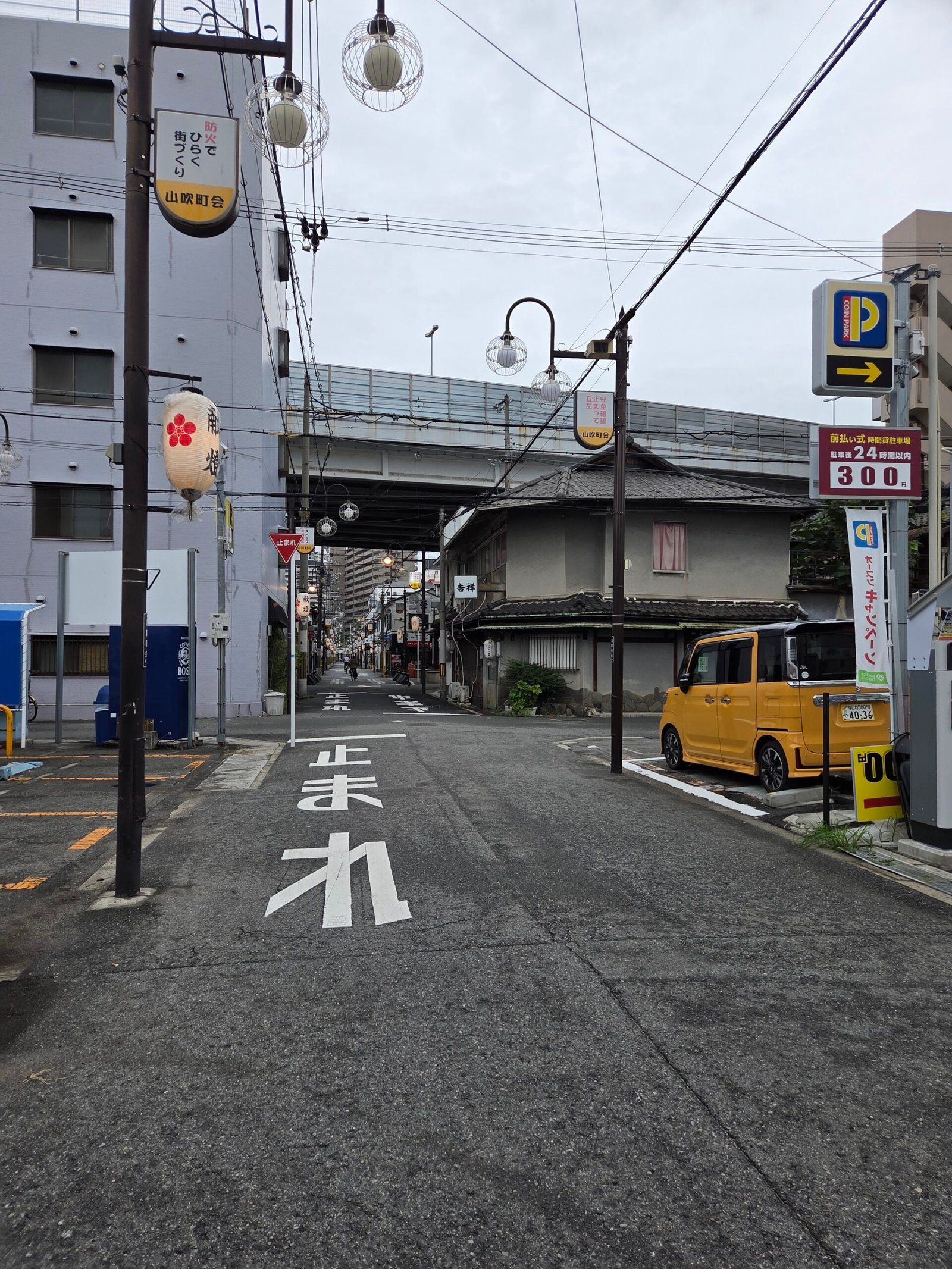
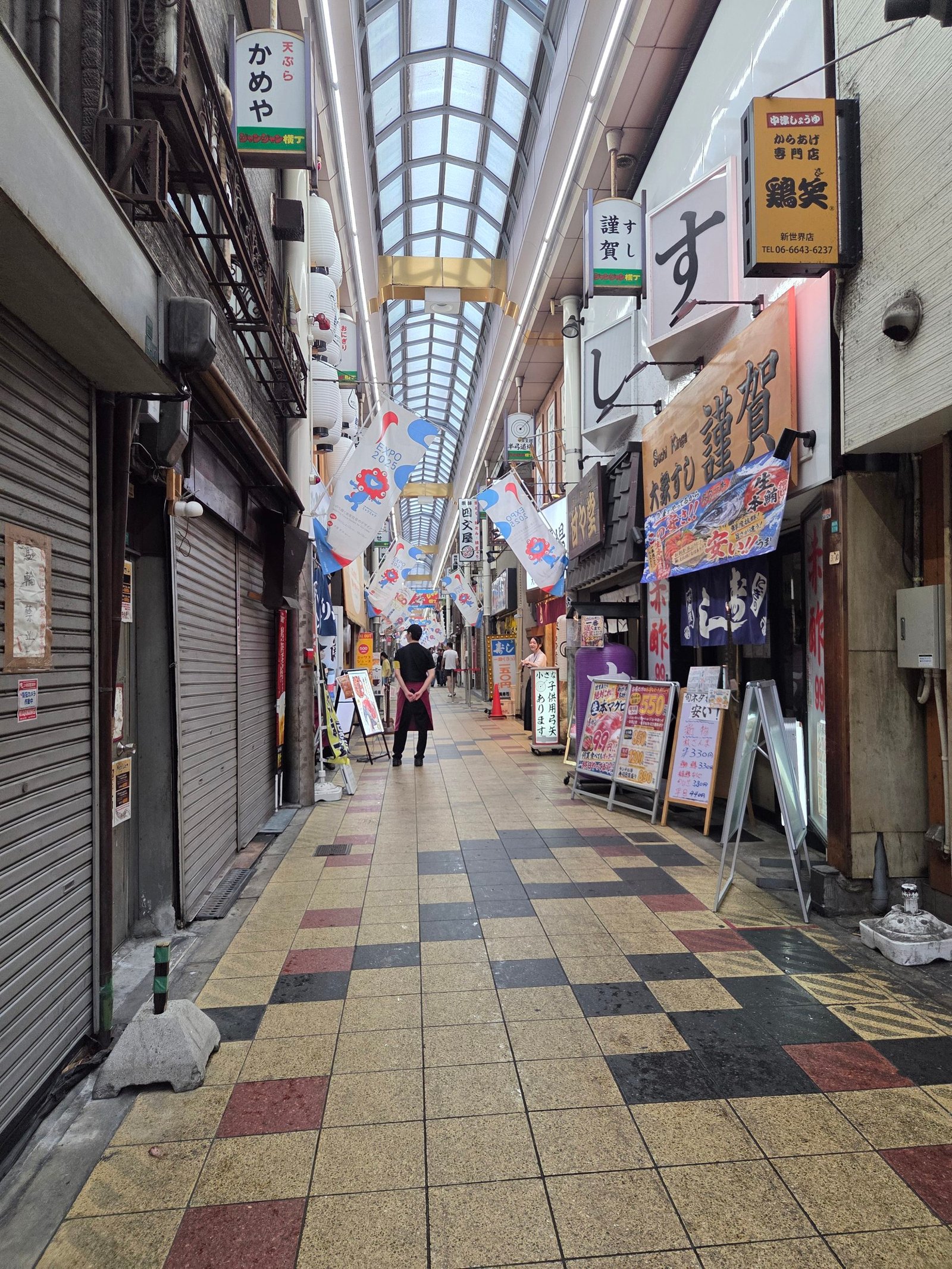
So yes, some things have been a little unexpected, but my days are taking shape in ways that I am able to look back on fondly. I spent my 3 days in Osaka city mostly aimlessly wandering, walking through the neighborhoods and down the seemingly infinite shopping streets. I had a few sites picked out that I wanted to check out, but honestly the ones I did see (Tennoji Park, Abeno Harukas, Denden town) weren’t terribly exciting to me, but still interesting to see. When I was walking, I realized I’m really just nosy. I’ll walk miles just to go see a thing and I don’t feel disappointed if it wasn’t that interesting, because the joy is in the experiencing of the thing, not necessarily liking it. I remembered a moment when I was a kid and my grandmother caught me going through her stuff. She told me it was rude to look through peoples’ things and ever since then, I seem to have diverted that curiosity from digging through peoples’ stuff to just watching people live and seeing what they’re doing, buying, and spending their time on. I’ll admit, I’ve been watching Americans for so long, I’m a little bored which I think is part of the reason I like walking around different cities in different countries so much. I get to see something new and figure out what’s up over here without “getting caught”.
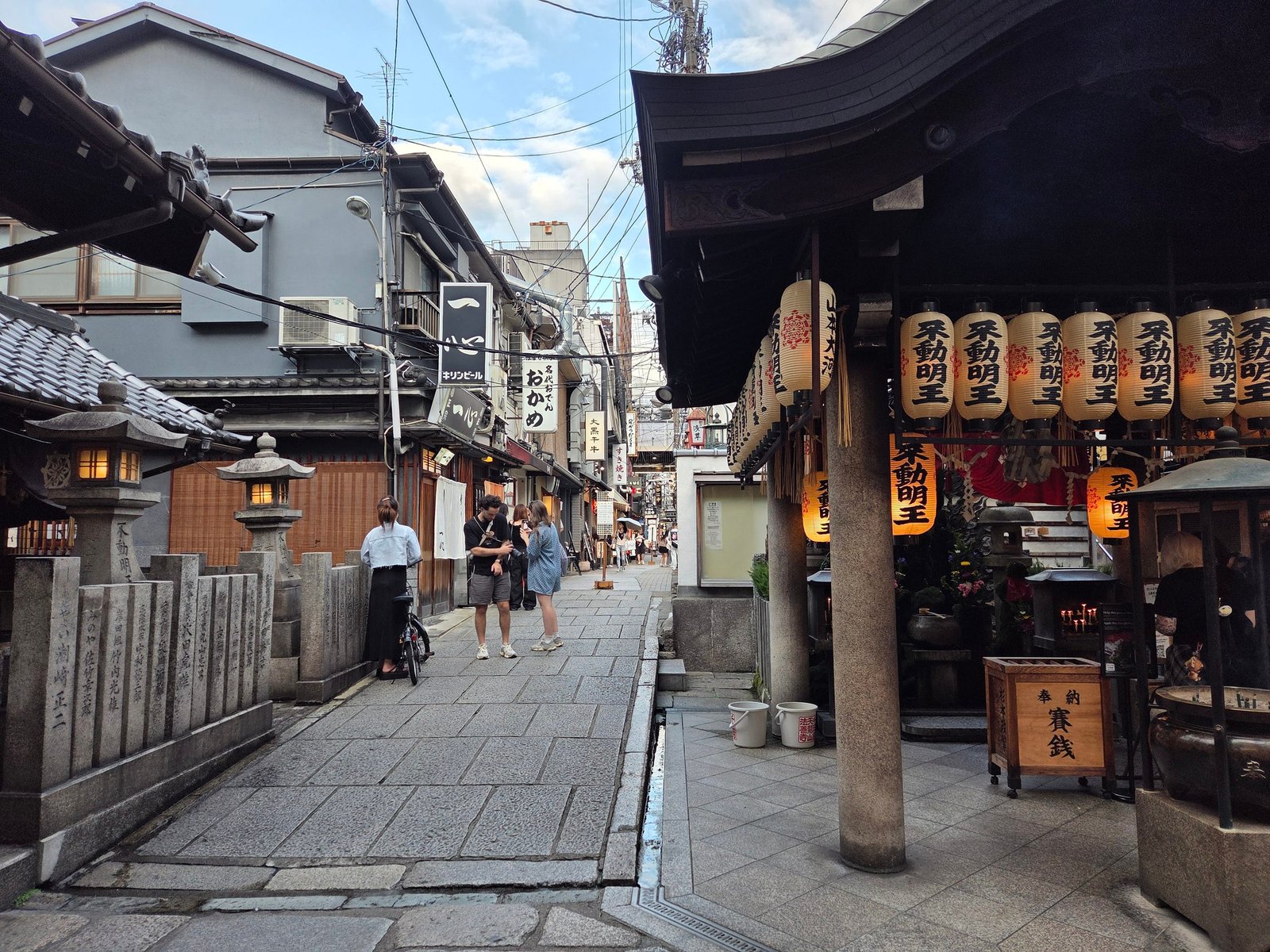
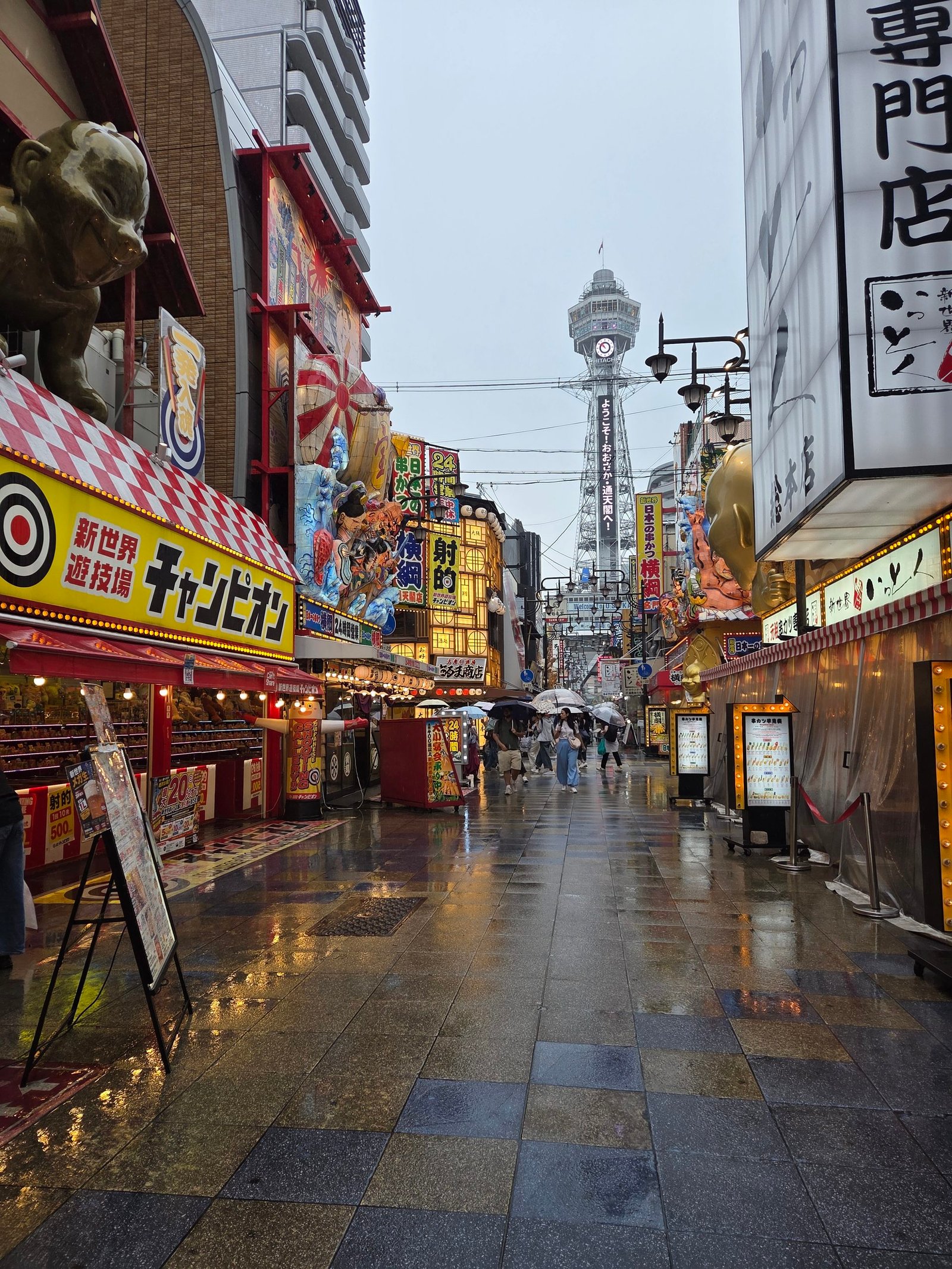
Japan especially piques my interest because:
- Japan is an OLD country. People have lived here for at least 130,000 years (as compared to the U.S. where it’s estimated that the first people arrived between 50,000 and 10,000 years ago).
- It’s one of the few countries I’ve visited that’s never been colonized by Europeans.
- The country experienced a 220-year period of total isolation from the rest of the world, giving the people here ample time to develop their own unique cultural identity.
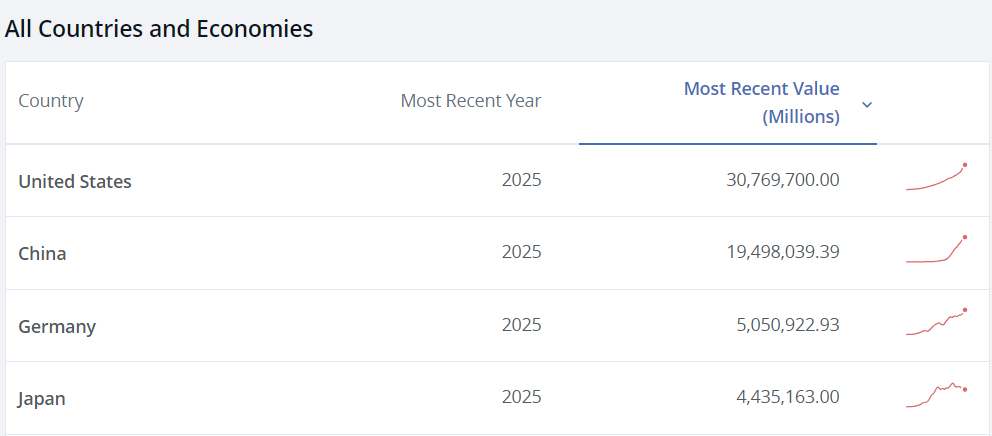
- Despite being a relatively small island nation with limited natural resources and centuries of absence from global markets, Japan ranks 4th globally in GDP.
Imagine that the land we call The United States of America had never been colonized by Europeans and instead remained completely isolated from 1492-1712. What would the country look like? How would the native peoples have wound up cooperating, challenging, and building together? Would one unified culture have emerged, or would it remain segmented? How would the world be different without the U.S as we know it? Would banana republics and exploitation of the masses still have risen to normalcy? Think of countries in sub-saharan Africa, Central America and other Asian countries. How would they be different had they been isolated in the way Japan was? Visiting Japan and observing the culture and people here, learning about the history, has given me some insight into what can happen under these very unique circumstances of isolation and self-realization.
So here are some of the most notable observations I’ve made about the people and ways of being here:
Attention to detail
The Japanese, and I mean everyday people, practice a distinct attention to detail and way of creating ease without necessarily reducing the need for effort. Let me try to explain. As you probably know, even the experience of using most public bathrooms in Japan is one of such comfort, you leave the bathroom feeling cleaner than when you entered – a next to zero-probability occurrence in the U.S. and most other nations I’ve visited. In order for that to be the case, however, everyone has to play their part in maintaining a clean environment and care and pride must be taken by the people charged with caring for the facility. You walk into the stall, where 99% of the time there is a thoughtfully located bag hook, a functioning lock, and sometimes even a little seat for small children accompanying their mothers in the restroom. You start by grabbing some toilet paper and spraying it with the sanitizer on the stall wall. (Take note, this requires both toilet paper and sanitizer to be stocked, which 100% success rate so far) You wipe down the seat to sanitize it. The seats always look clean unlike U.S toilets where the seats look like they’ve been subjected to decades of neglect, so this doesn’t feel like a disgusting chore. As you wipe down the seat, the bidet nozzle runs a quick cleaning cycle so it’s fresh for use. Then you can comfortably sit and take care of your business.
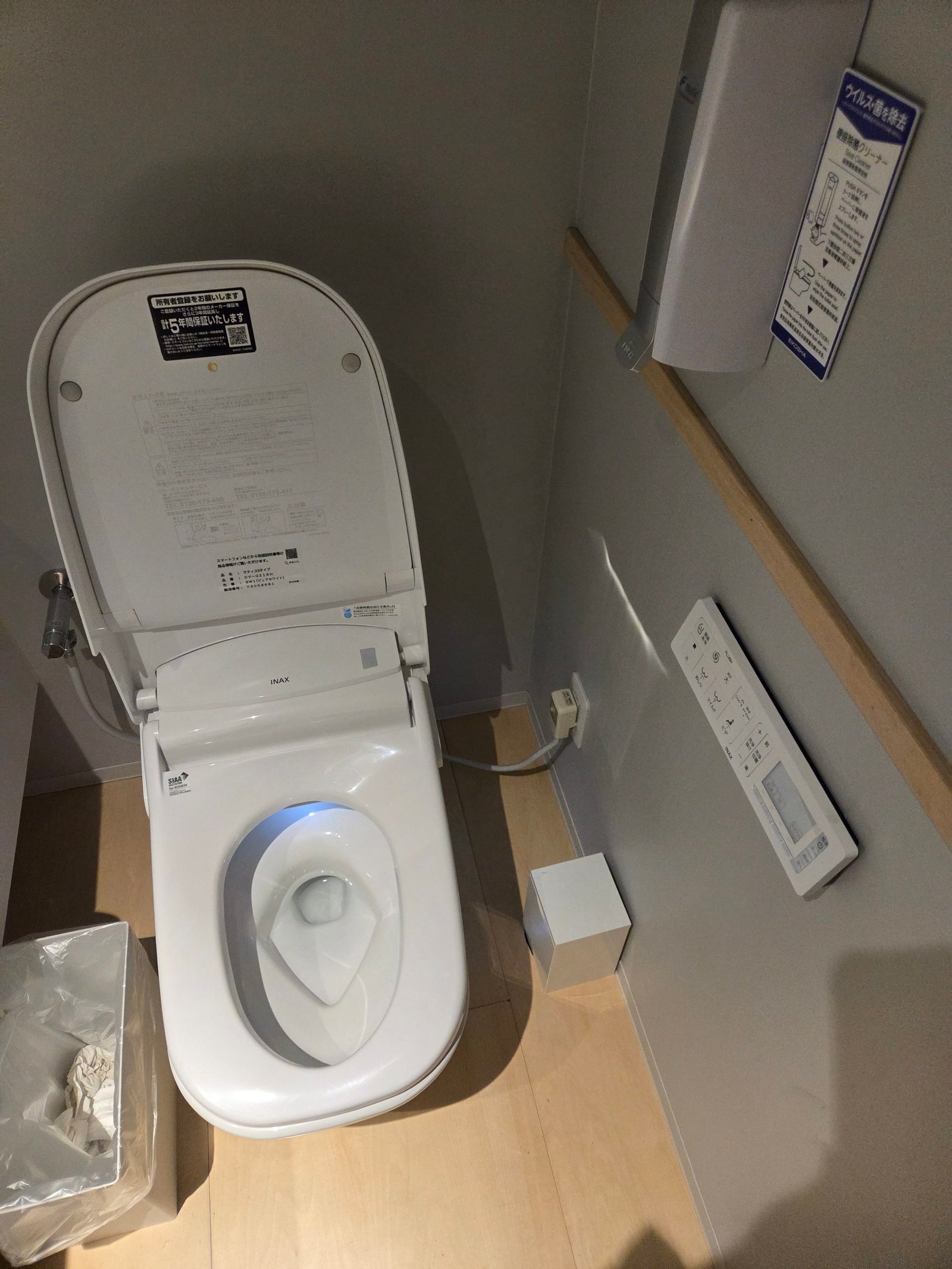
Some, but not all, of the seats are warmed. For additional privacy, you can press the “privacy” button on the bidet attached to the wall or the side of the toilet which will play gentle music and the sound of a tranquil stream. So luxurious. When you’re done, use the bidet for a good rinse. Wipe, flush and you’re on your way. Unfortunately, I’ve seen women not using soap to wash their hands, but, well, I guess humans are people everywhere. I outline all this to show that one of the most generally uncomfortable tasks in a public space is actually kind of a vibe in Japan. That can’t happen without prioritizing the details of creating a space catered to enjoyable use and maintaining it with care. As someone who is a big fan of being clean, I really love it. Also, I haven’t seen a moldy shower curtain or dirty dish here yet. It’s the simple things, really.
A culture of respect
From what I’ve seen and experienced here, bowing is a commonplace show of respect that, it seems, every adult is entitled to. Now I will say that being a major tourist destination can make some customs crumble under the pressure of large crowds of foreigners deviating from the norms, but when I go to more local spots, or even throughout my time in Higashiōsaka, many daily norms involve showing respect and courtesy to the people around you. Being quiet in public spaces is one way. There are signs on the trains asking passengers to turn their phones to silent and refrain from having loud conversations as not to disturb other passengers. The trains where I was the only foreigner have all been very quiet with literally everyone sitting on their phones. Transactions are handled with intention and care, as objects are to be handed and received carefully using both hands and with a small bow. If someone is yielding to you on the street, it’s done with a small bow and show of the palm. Walking into a small shop, you’re greeted with a small bow and a welcome. It’s generally too crowded to be saying “good morning” and “good afternoon” to passersby on the street, but a small nod of the head isn’t rare. It’s just easy to see other people as people when they stop and take the time to acknowledge you and you do the same. And respect doesn’t stop with the people around you. Staying in a traditional guest house (Takio Guest House) in Higashiōsaka, I got to experience the daily ritual of entering and leaving the home with a bow, 2 claps of the hands and a small prayer at the shrine dedicated to the ancestors of the home.
Sidenote: I THOUROUGHLY enjoyed my time at Takio Guest House and highly highly highly recommend it to anyone looking for accommodations in the Osaka prefecture. The hosts, Makoto and Naomi, were tremendously warm and welcoming, inviting me and the other guests to join them for a home-cooked lunch and teaching us how to play a fun Japanese card game which I don’t know the name of, but I wrote down the rules. We even had a cooking night where the guests all got to help make a dinner of okinomiyaki. Despite being a shared guest house, the place was very very clean and I felt really comfortable there.
Higher standards
Here’s something I’ve seen on Google reviews in Japan:
“The food was delicious, the atmosphere was clean and very beautiful, and the service was very good.” 3/5 stars.
Like LOL huh??? The standards for excellence here are of a caliber so high that I’m questioning how and why mediocrity has been woven into the thread of normal daily life in so many places around the world. My first morning here, I wanted to experience a more traditional Japanese breakfast. So I went to reddit to see what people recommended. Previous threads showed that a local chain called Sukiya offers a nice breakfast set (sets are like combo meals) for around $6 USD, so I headed there. Now this was a quick, value breakfast served at a counter and meant to be eaten quickly. Look at how balanced this meal is, yall. All real food – none of it is processed, high-fructose nonsense.
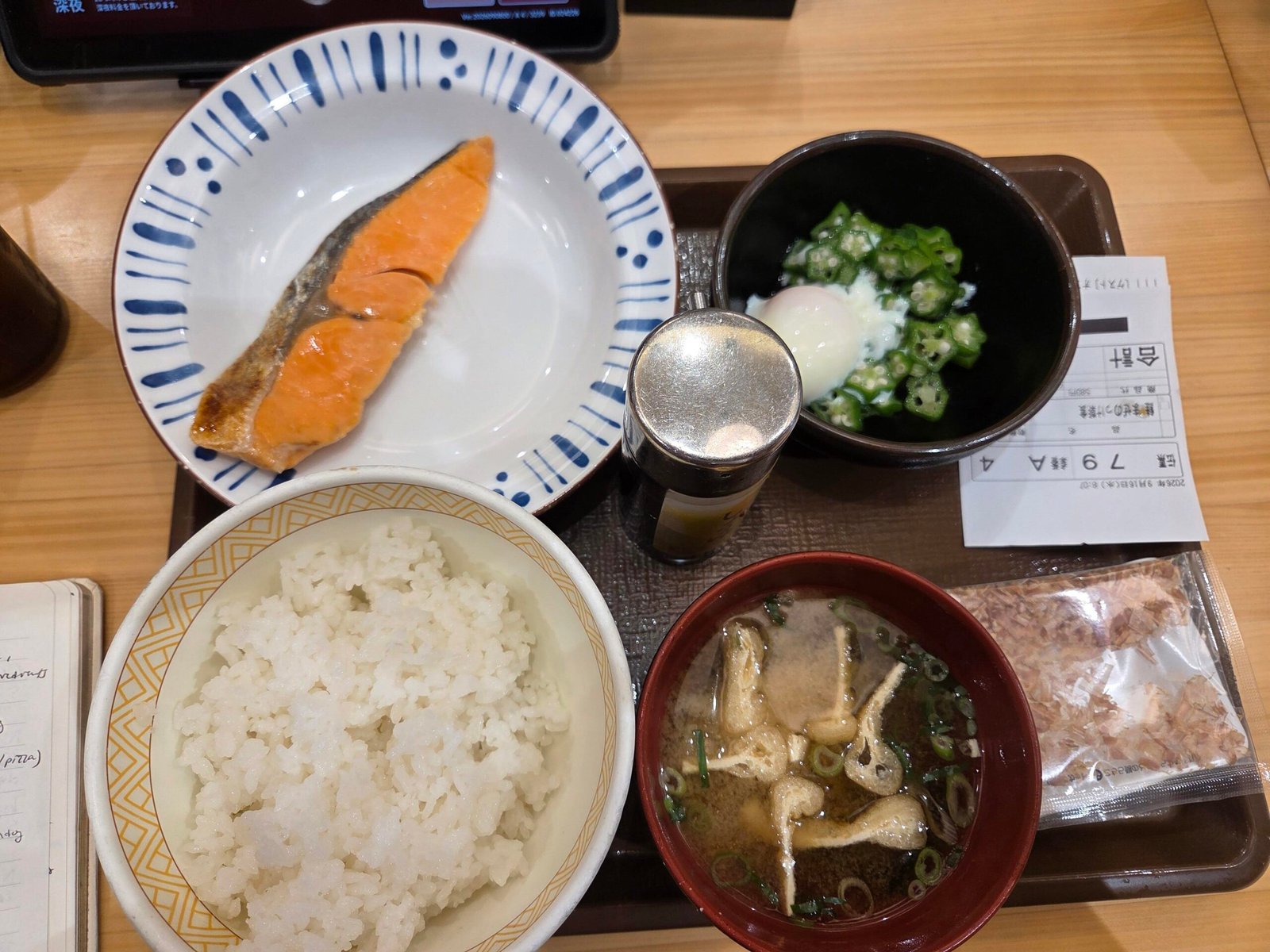
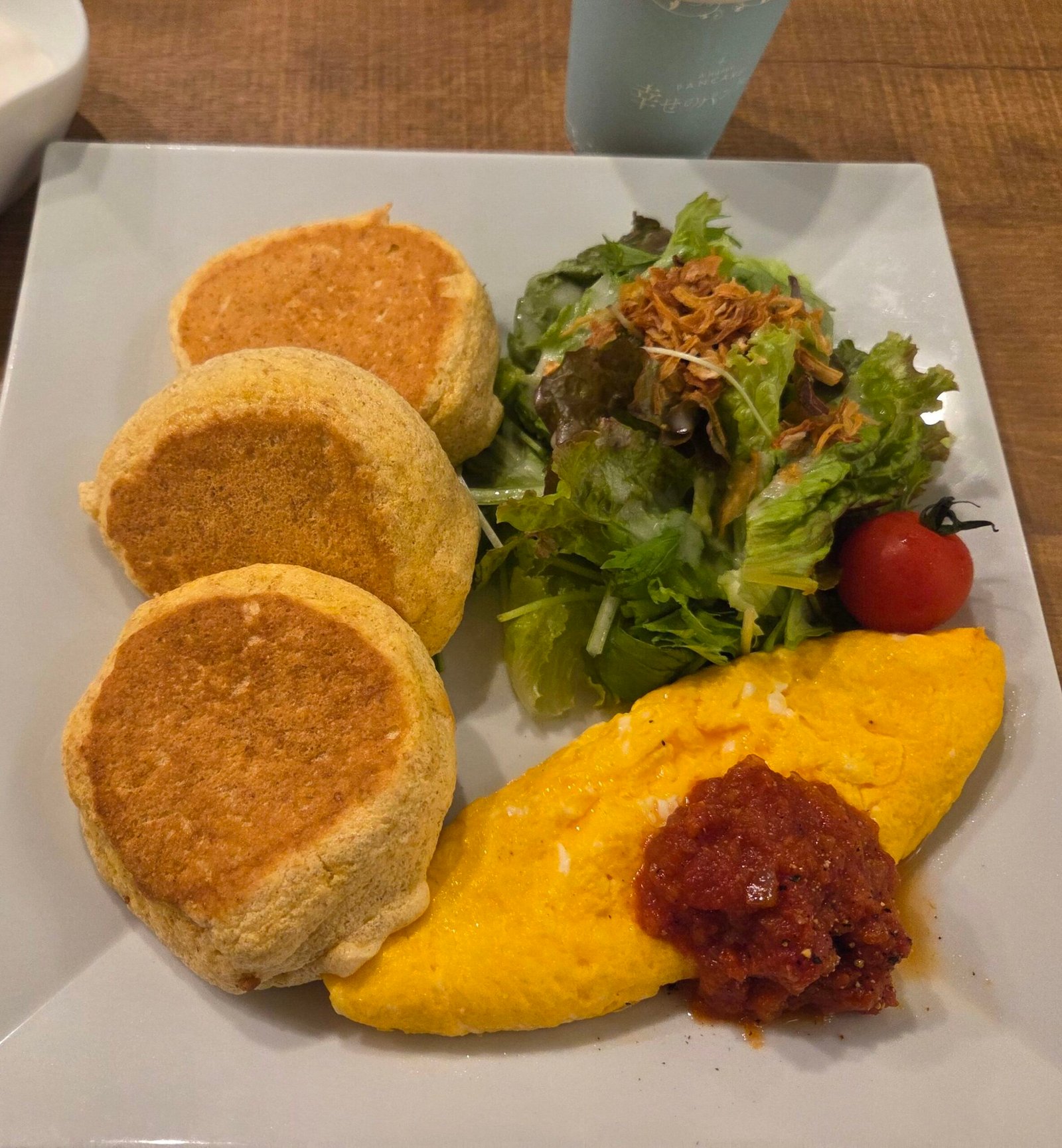
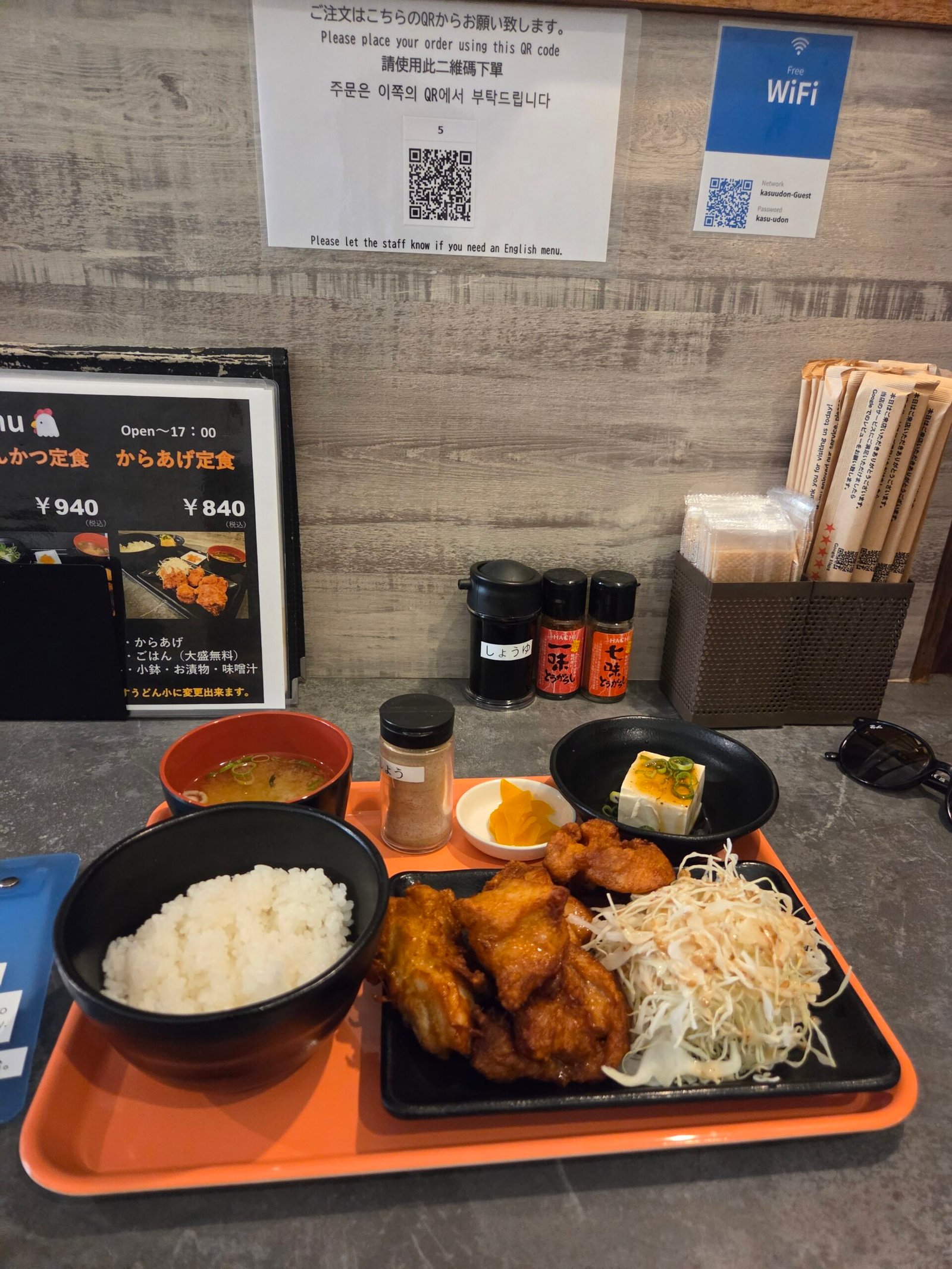
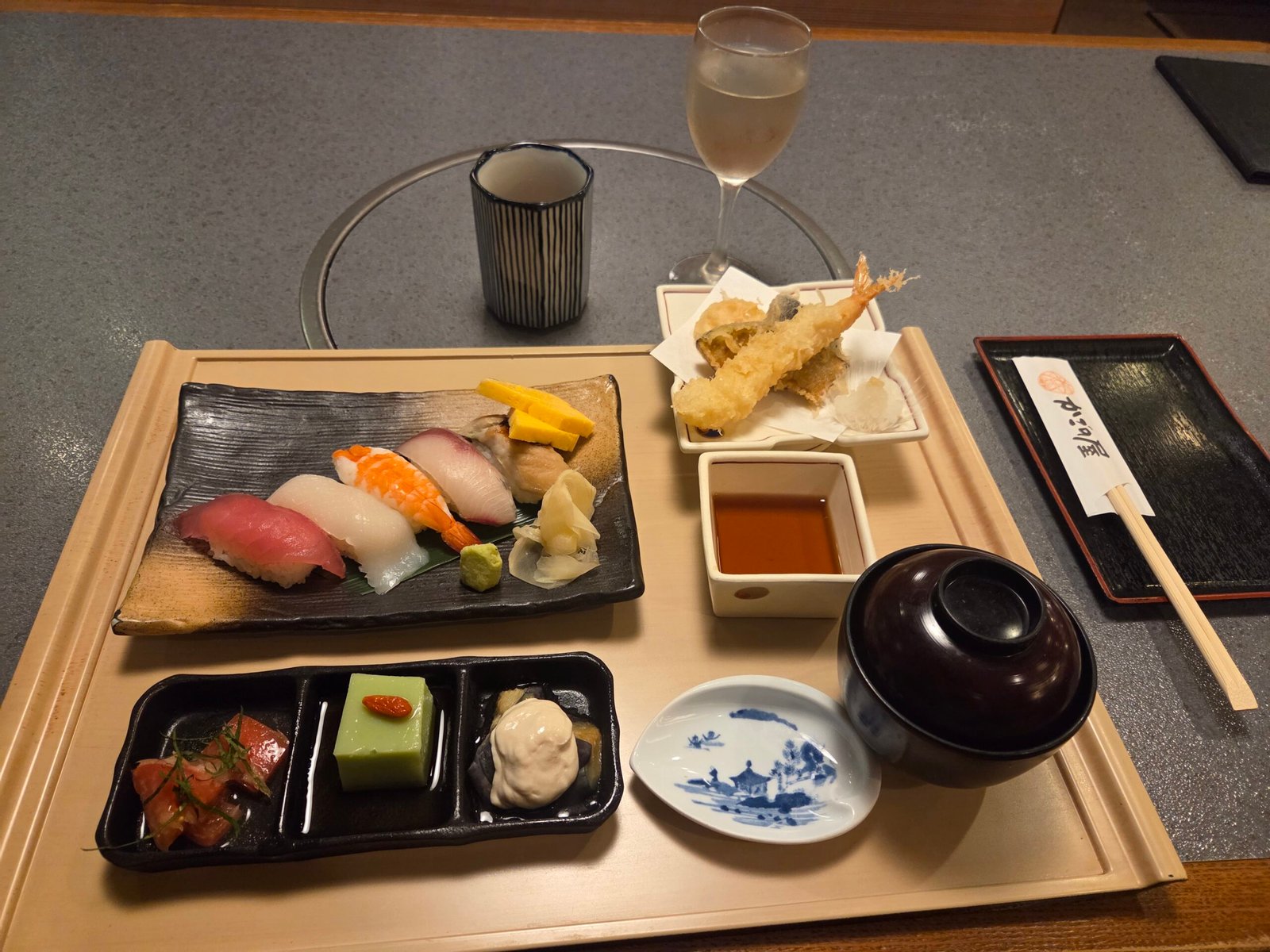
Protein! Carbohydrates! Fiber! Probiotics in a warm, delicious miso soup! Just real, glorious food at an accessible price. I don’t care for okra, but you better believe I was grateful to have it on my plate for around $6. And this is a “fast-food” restaurant. People don’t eat and walk on the street here. It’s considered rude (outside of tourist markets with limited seating). Instead, sitting down and enjoying a real, wholesome, balanced meal is the standard. And the eating here is GOOD. A breakfast, lunch and dinner:
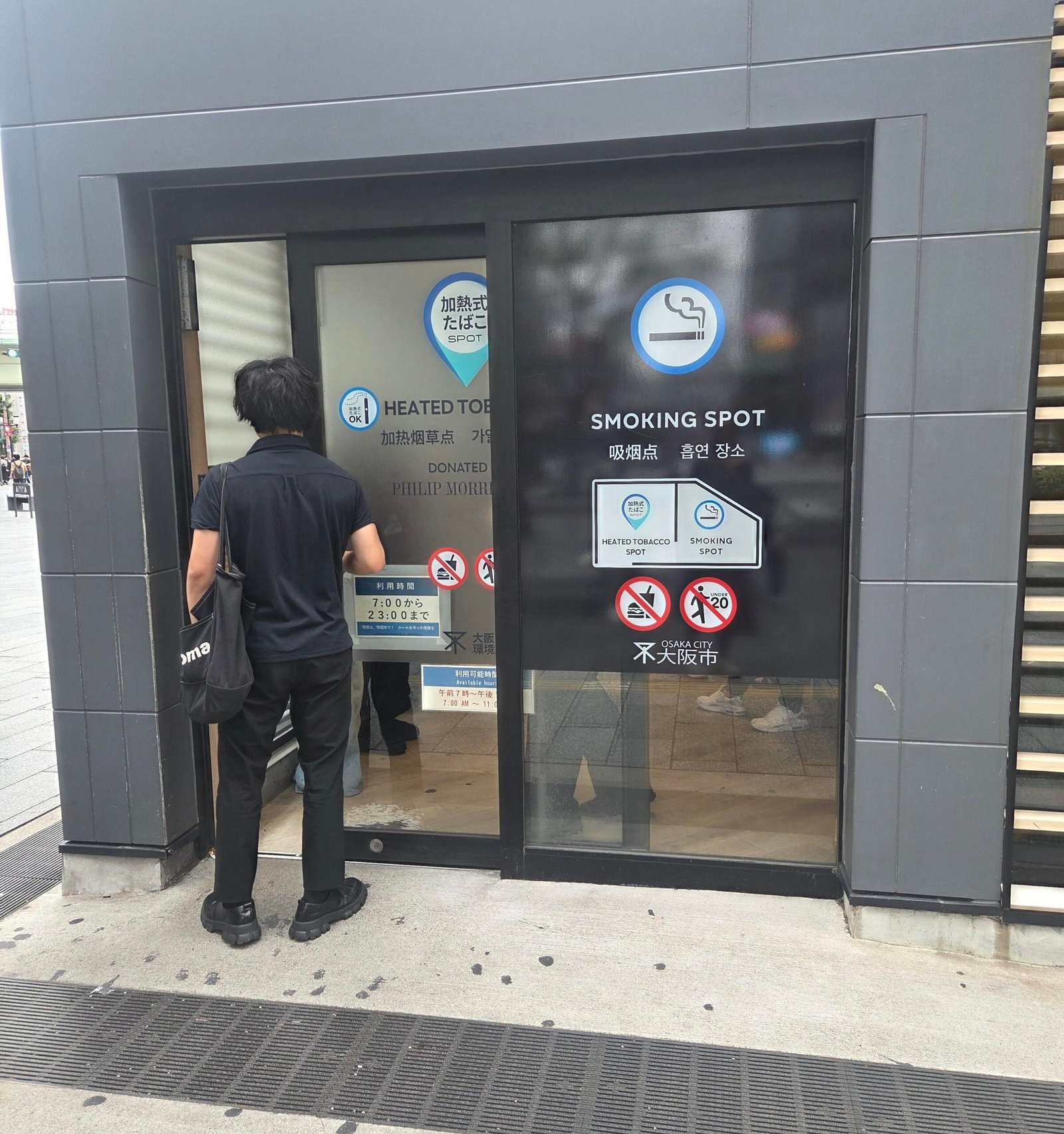
It isn’t just healthy, delicious food. Access to clean, fast, convenient public transportation is unfathomably easy. Rail tickets between cities that are closer together (like Osaka – Kyoto) cost under $10. And some of the train stations are very nice with delicious, healthy, affordable offerings of food, clean and free facilities, waiting rooms, and even smoking rooms (a cool concept – put the smokers in their own room instead of having them smoke outside and make all the air smelly). Just. Nice.
So yeah, that’s 3 observations I’ve made so far while out and about exploring with no plans. Learning along the way and my appreciation for this country, the culture, and the people has remained steady. Of course, it isn’t all sunshine and roses. The work culture here is world-renowned for causing a lot of depression, social isolation and even leading people to commit suicide. Someone at the guest house who teaches English told me even the teachers here are on a year-round work schedule with summer being the “desk warming” period. They just sit there for 8 hours a day with no students and no work. So, yeah. The diligence and attention to detail can lean towards a rigidity of sorts. This is what I’ve seen for the last 9 days of wandering and watching.